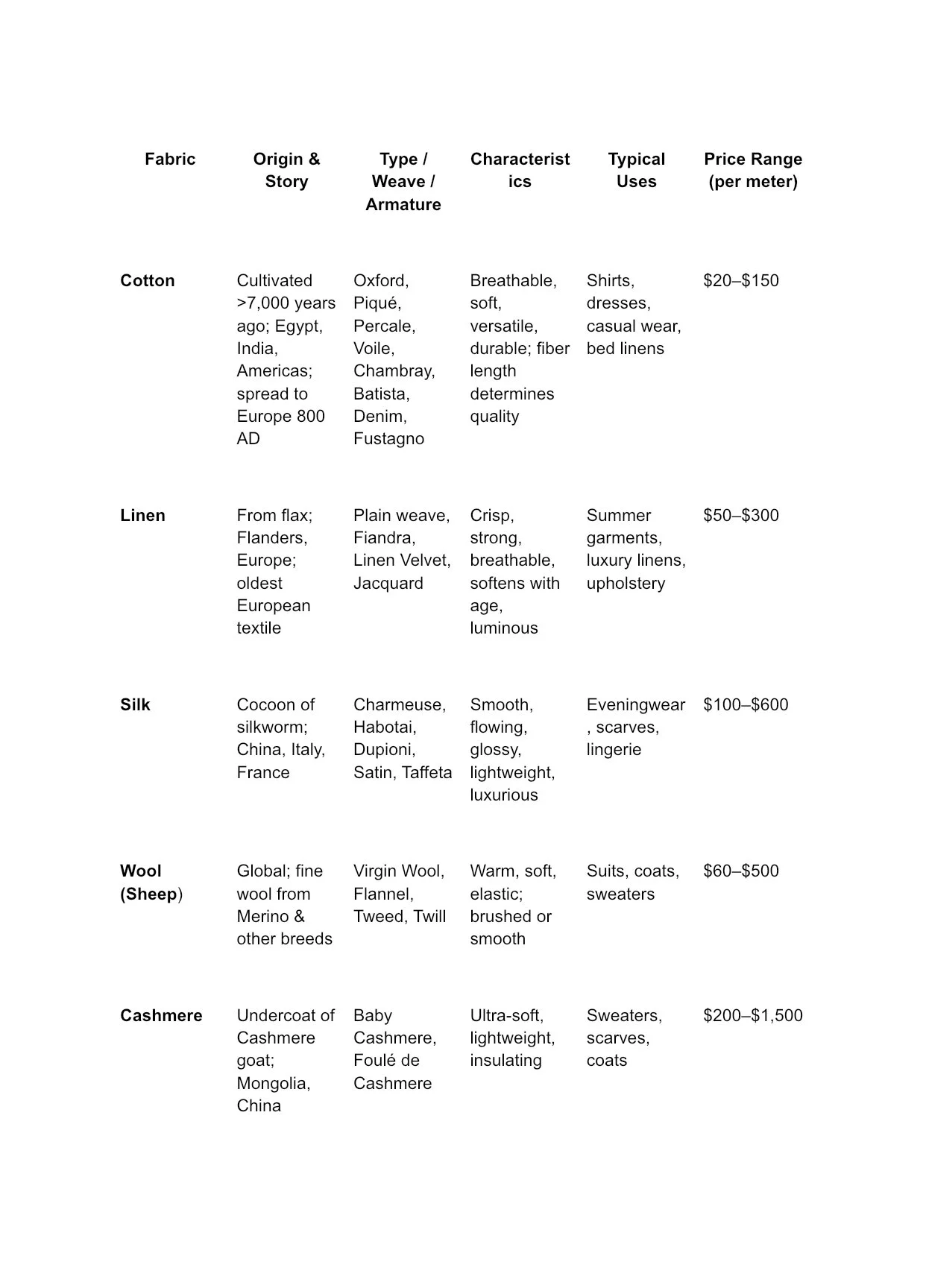
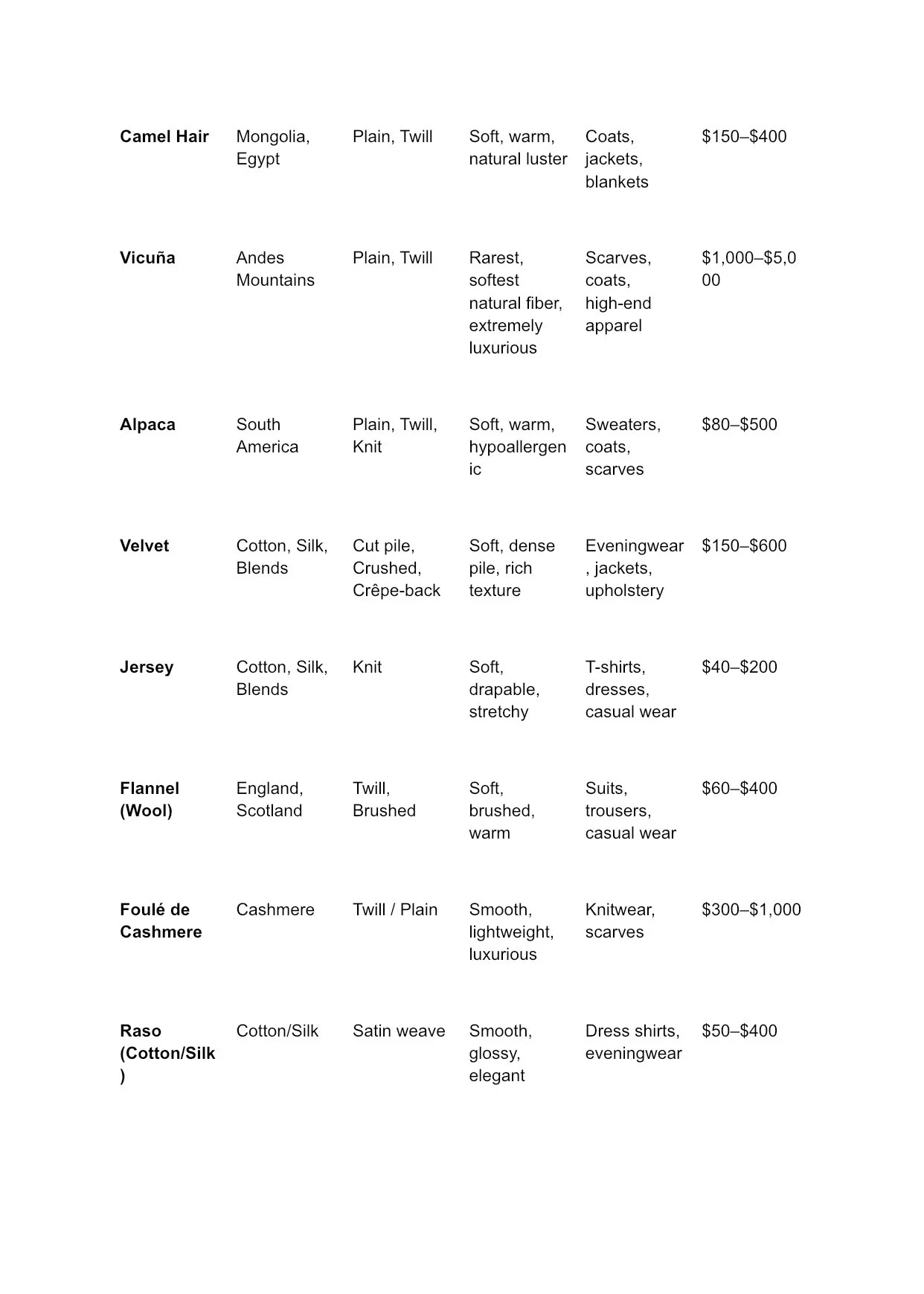
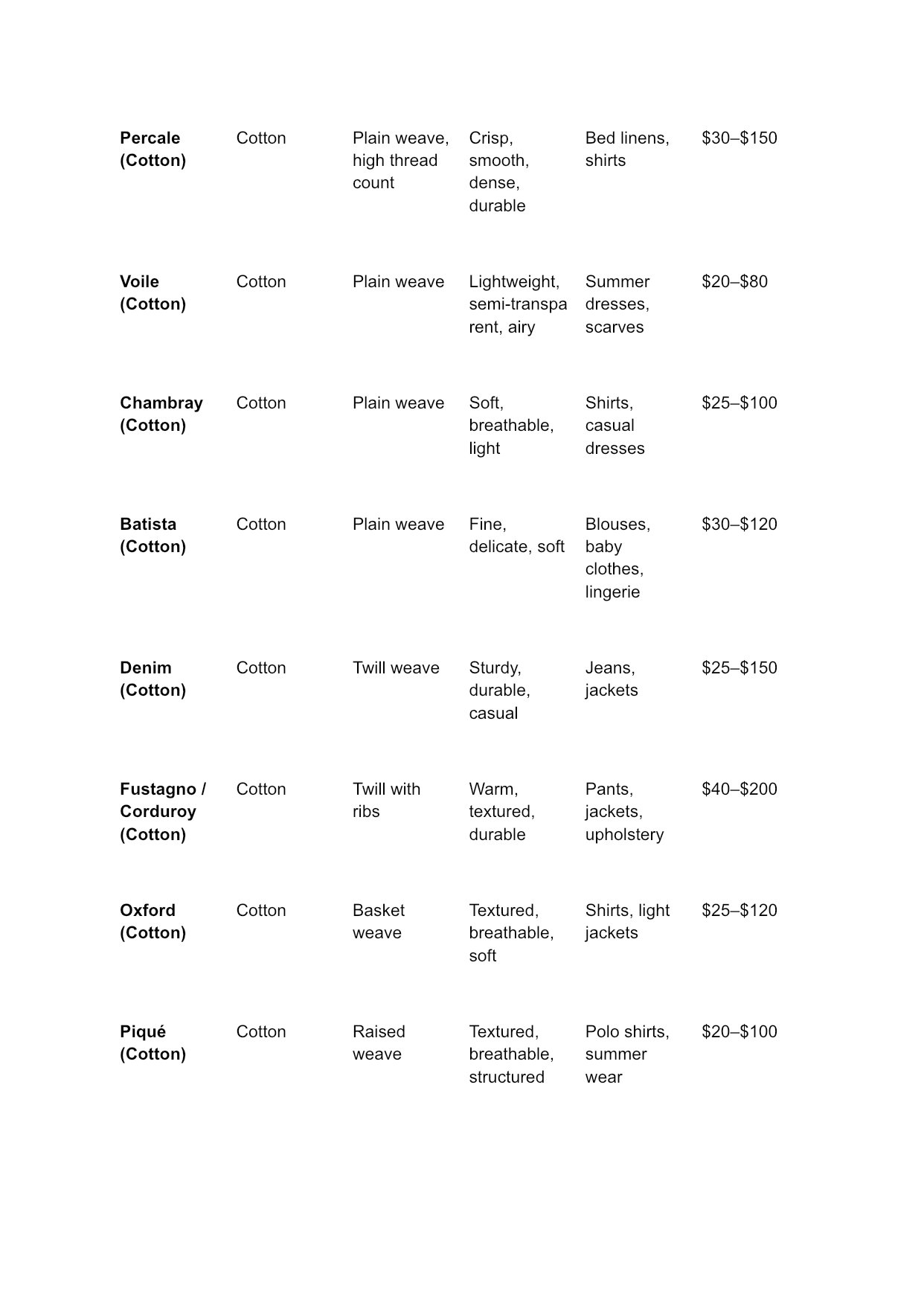
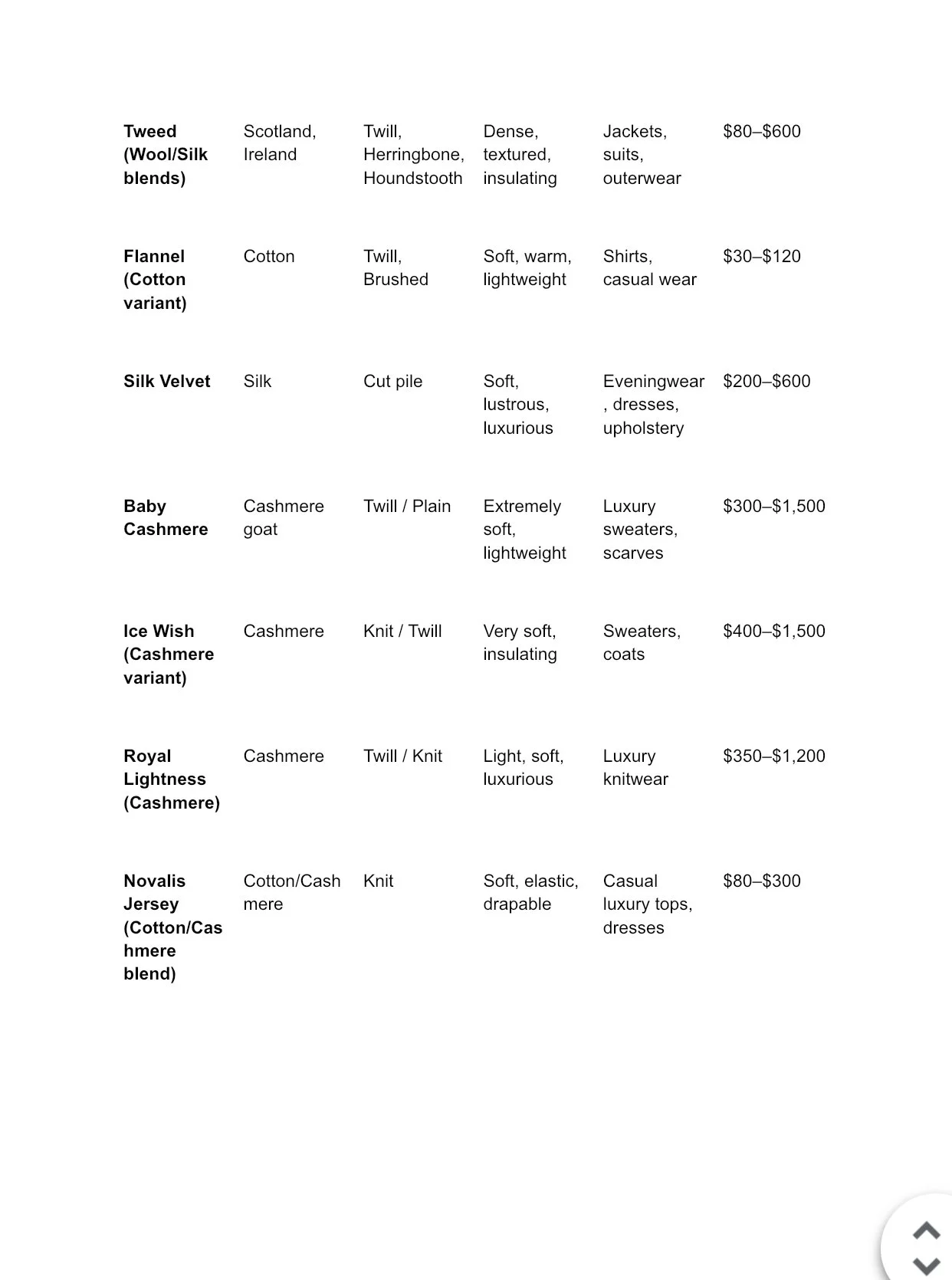
The Encyclopedia of Luxury Fabrics
The Language of Fabrics
Elegance begins long before a dress is tailored, before a suit is cut, before a scarf is draped over a shoulder. It begins with fabric. The texture of cotton against the skin, the cool crispness of linen in summer, the liquid shimmer of silk under the light, the enveloping warmth of cashmere in winter, fabrics are not just materials, they are stories woven into threads.
To understand fabrics is to understand the architecture of style. A woman or man who knows their textiles does not choose clothes blindly; they select with intention, aware that each fibre carries with it a heritage, a season, a mood, and above all, a message.
Luxury is never accidental. The difference between a shirt that lasts one season and one that becomes an heirloom is often hidden in the choice of fabric. A fine Oxford cotton can survive years of wear without losing its form. A piece of vicuña, rare and almost impossible to find, will outlive generations as one of the most prized fibres in the world. Linen, with its ancient history, embodies purity and freshness, while velvet speaks in whispers of nobility and decadence.
This guide is more than an encyclopedia: it is a key. A key to recognize quality at first glance, to understand why certain fabrics cost hundreds, or thousands, per meter, and to learn how to transform a wardrobe into an archive of timeless beauty. It is not about trend, it is about permanence.
We will travel fibre by fibre, weave by weave, from the humble cotton fields to the rarest mountain peaks of Peru. We will discover why some fabrics breathe in summer while others insulate in the harshest winters, why some shine with fluidity while others embrace with structure.
Knowing fabrics is knowing yourself, because every texture you choose is an extension of your identity, a silent dialogue with the world.
Welcome to the Encyclopedia of Luxury Fabrics: your passport to mastering style and elegance from the inside out.
Cotton – The Timeless Foundation of Elegance
Cotton is the fibre of comfort, versatility, and enduring luxury. For over 7,000 years, cotton has clothed humanity, from the ancient fields of the Indus Valley to the Nile Delta of Egypt, and into the ateliers of Europe. Its story is one of patience and precision: each fibre, spun and woven with care, tells a tale of cultivation, craftsmanship, and refinement.
Cotton is more than casual; in luxury contexts, it defines sophistication. Its natural breathability, softness, and adaptability make it the ideal base for shirts, summer suits, delicate blouses, and fine bedding. But not all cotton is created equal: fibre length, thread count, and weave determine whether a garment merely covers the body or elevates presence.
Origins and Varieties
1. Gossypium hirsutum – Upland Cotton: Predominantly grown in Central America, the Caribbean, and southern United States, this is the most common luxury cotton, prized for its durability and smooth finish.
2. Gossypium barbadense – Egyptian or Pima Cotton: Known for its long, silky fibres, it produces supremely soft, strong, and lustrous fabrics.
3. Gossypium arboreum – Tree Cotton: Native to India and Pakistan, offering a coarser but resilient fibre, often used for traditional textiles.
4. Gossypium herbaceum – Indian Cotton: Originating from South Africa and the Arabian Peninsula, less fine but historically significant in woven heritage pieces.
Fibre Length & Quality:
• Short Fibre: 10–18 mm – practical but less luxurious.
• Medium Fibre: 18–28 mm – standard quality, used in everyday luxury pieces.
• Long Fibre: 28–48+ mm – the foundation for premium garments; smoother, stronger, and visually superior.
Luxury Cotton Weaves and Textures
1. Oxford – A hallmark of casual elegance, its basket-weave structure produces a soft, slightly textured feel, ideal for shirts that balance formality with comfort.
2. Poplin – Fine, crisp, and tightly woven; perfect for tailored shirts and lightweight dresses, giving a sleek, smooth surface.
3. Chambray – Lightweight, soft, often blue-and-white, versatile for casual shirts and airy summer garments.
4. Piqué – Recognizable by its raised, textured pattern; used famously for Lacoste polos, offering breathability and subtle visual interest.
5. Percale – High thread count, smooth and cool; premium bedding and shirts, tactile luxury in every touch.
6. Voile – Semi-transparent, ultra-lightweight; ideal for summer blouses and scarves, drapes beautifully.
7. Denim – Twill weave, robust and enduring; premium denim uses long-staple cotton for softness and longevity.
8. Batista – Soft, delicate, slightly sheer; suited for fine blouses, lingerie, and ceremonial garments.
9. Calico – Durable, practical; often used for interior detailing, occasional apparel, and luxury casual pieces.
10. Jersey – Soft knit, flexible and comfortable; luxury cotton jersey maintains shape and sheen, perfect for casual-chic layering.
11. Jacquard – Woven patterns integrated directly into the fabric; intricate designs convey opulence without additional embellishments.
Luxury Notes & Care
• Feel & Drapability: High-quality cotton is smooth, even in weave, and feels soft yet substantial.
• Durability: Long-staple cotton resists pilling, tearing, and wear, maintaining structure over years.
• Investment: Properly maintained, cotton garments, shirts, dresses, trousers, can last decades.
• Care: Wash with similar fibres, avoid harsh detergents, air dry when possible. Mercerized cotton (like Filo di Scozia) offers extra sheen and resilience.
Price Range (per meter, approximate luxury market):
• Standard long-staple cotton: $25–$60/m
• Egyptian/Pima cotton: $50–$120/m
• Special weaves (jacquard, piqué, percale): $80–$200/m
Cotton is the quiet hero of luxury. It is understated yet versatile, simple yet infinitely nuanced. Knowing its varieties, weaves, and quality allows one to select garments that speak of refinement, longevity, and subtle power. A fine cotton shirt is not just clothing, it is an investment in presence, a statement of taste, a whisper of sophistication that never goes out of style.
Linen – The Breath of Elegance
Linen is the fabric of timeless sophistication, celebrated for millennia as the epitome of natural luxury. Its history stretches back over 6,000 years, from the banks of the Nile, where Egyptian pharaohs wore finely woven linen, to the ateliers of Renaissance Europe, where it draped nobles in effortless elegance. Linen’s magic lies in its fibres: long, strong, and hollow, allowing unparalleled breathability, crispness, and durability.
Unlike other fabrics, linen improves with age. Each wash softens it, each wear enriches its texture, yet it never loses its innate freshness. This is a fabric that does not just clothe the body; it elevates it.
Origins and Varieties
• Flax Linen (Linum usitatissimum): The most prestigious variety, cultivated in Europe, particularly in Belgium, France, and Italy. Its long fibres produce smooth, lustrous fabrics ideal for high-end shirts, dresses, and household textiles.
• Fine Linen (Fiandra): Originating from the Flanders region, this ultra-smooth, tightly woven linen is prized for luxury bed linens, tablecloths, and delicate summer attire.
• Raw Linen: Coarser, rustic linen with visible texture; often used in home décor and casual wear, offering strength and character.
• Velvet Linen: A luxurious, soft variation with a plush surface, perfect for statement upholstery, cushions, or winter garments.
• Linen with Long Fibres (Long-staple Linen): Produced from the tallest, most robust flax plants, offering exceptional drape, durability, and a subtle natural sheen.
Luxury Linen Weaves and Textures
1. Plain Weave (Canvas): Crisp and durable, ideal for shirts, trousers, and summer jackets.
2. Damask Linen: A jacquard-style weave with subtle patterns, traditionally used for table linens, luxury bedding, and ceremonial garments.
3. Huckaback: Recognizable by its absorbent, textured weave; historically for towels, now used in fine linens and casual clothing.
4. Basket Weave: Coarser texture for a rustic, tactile appeal; perfect for decorative items and relaxed, breathable garments.
5. Irish Linen: Renowned worldwide for its long, soft fibres and impeccable craftsmanship; frequently used for premium shirts and dresses.
Luxury Notes & Care
• Feel & Drapability: Linen is crisp yet smooth, lightweight yet structured. It breathes with the body, ideal for summer heat or layering in cooler months.
• Durability: One of the strongest natural fibres; properly cared for, linen garments can last decades.
• Care: Machine washable on gentle cycles or hand wash; iron while damp for a perfect finish. Linen naturally softens over time, enhancing comfort and luxury.
• Investment: Linen represents a long-term wardrobe value, pieces only improve with age.
Price Range (per meter, approximate luxury market):
• Standard long-fibre linen: $40–$100/m
• Fiandra / Irish Linen: $90–$250/m
• Velvet or patterned linen: $120–$350/m
Linen is the essence of understated elegance. It moves with the body, whispers refinement, and signals confidence without effort. A linen shirt, blouse, or suit is more than a garment, it is a testament to knowledge, taste, and respect for natural luxury. With linen, one embraces a lifestyle of comfort, poise, and timeless style.
Silk – Liquid Elegance
Silk is the fabric of dreams, a fibre that has captivated humanity for over 5,000 years. Originating from ancient China, silk was once reserved for emperors, royalty, and the most exquisite ceremonial garments. Its production was a closely guarded secret, weaving a tapestry of mystery, luxury, and desire that stretched across continents via the legendary Silk Road.
Silk is more than beautiful; it is alive. Its fluid drape, luminous sheen, and delicate softness make it the ultimate expression of elegance. Unlike other fibres, silk responds to the body, moving and reflecting light with every gesture. A silk scarf, blouse, or evening gown communicates refinement, sensuality, and poise in a way no other fabric can.
Origins and Varieties
1. Mulberry Silk: The gold standard of silk production, cultivated in China and Japan from silkworms fed exclusively on mulberry leaves. Its fibres are long, uniform, and incredibly smooth, producing the softest and most lustrous fabrics.
2. Tussah Silk: Wild silk, slightly coarser and with natural color variations ranging from tan to beige, prized for textured garments and artisanal weaving.
3. Eri Silk: Also known as peace silk, grown without killing the silkworm, producing soft, breathable fabrics suitable for luxurious casual wear.
4. Muga Silk: Native to India, golden in hue, extremely rare, and historically worn by royalty.
5. Charmeuse: Lightweight, satin-finish silk, ideal for draping gowns and lingerie.
6. Dupioni: Crisp, textured silk with natural slubs; perfect for structured dresses, suits, and statement pieces.
7. Chiffon: Sheer, delicate, and airy, ideal for flowing eveningwear, scarves, and blouses.
8. Habutai: Soft, smooth silk used for linings, blouses, and light summer garments.
Luxury Silk Weaves and Textures
1. Satin Weave: Smooth, reflective surface; luxurious and sensual, commonly used for evening gowns, lingerie, and high-end blouses.
2. Jacquard Silk: Patterns woven directly into the fabric; often used for eveningwear, upholstery, and statement pieces.
3. Crepe de Chine: Fine, matte silk with a slightly crinkled texture; elegant and versatile, ideal for blouses and dresses.
4. Silk Velvet: Plush, dense, and opulent; evokes nobility and theatrical glamour.
5. Organza: Sheer, crisp silk that holds shape beautifully; perfect for structured overlays, bridal wear, and couture detailing.
Luxury Notes & Care
• Feel & Drapability: Silk is smooth, cool to the touch, and fluid, capable of both draping softly and holding structured folds.
• Durability: While delicate, high-quality silk resists aging if handled carefully, maintaining its sheen and strength over decades.
• Care: Hand wash in cold water or dry clean. Avoid prolonged sun exposure to prevent fading. Iron on low heat with a protective cloth.
• Investment: A silk garment, when cared for, is timeless and can be passed through generations.
Price Range (per meter, approximate luxury market):
• Standard Mulberry Silk: $80–$250/m
• Dupioni / Jacquard / Velvet Silk: $150–$400/m
• Rare Silks (Muga, Tussah): $300–$800/m
Silk is the epitome of refined taste and subtle power. It signals knowledge, discernment, and an intimate understanding of quality. Owning silk is not just about wearing luxury; it is about inhabiting it, living it, and letting the fabric articulate elegance in every movement.
Velvet, Wool & Cashmere – The Textures of Prestige
Luxury is felt before it is seen, and few fabrics communicate prestige and refinement like velvet, wool, and cashmere. These fibres, all derived from animals, embody warmth, richness, and elegance. Each tells a story, from mountain pastures and Himalayan plateaus to Italian and Scottish mills, where centuries of craftsmanship transform raw fibre into timeless masterpieces.
VELVET
Velvet is the fabric of opulence, instantly recognizable for its soft, dense pile and reflective depth. Historically reserved for royalty and the aristocracy, velvet conveys authority, sensuality, and sophistication.
Varieties & Origins:
• Silk Velvet: Smooth, lustrous, and luxurious; ideal for evening gowns, jackets, and upholstery.
• Cotton Velvet: Softer and more casual, often used in jackets and dresses with a tactile, inviting feel.
• Velour: Knit velvet, plush and flexible, popular in casual luxury and loungewear.
• Crushed Velvet: Textured by pressing or twisting the pile; dramatic and fashion-forward.
Luxury Notes: Velvet is visually rich, tactilely seductive, and demands care: dry clean or steam gently. Its price reflects quality and fibre, silk velvet can reach $250–$600 per meter.
WOOL
Wool is the quintessential natural fibre for warmth, structure, and longevity. Its versatility spans from fine suiting to cozy knits, making it indispensable for luxury wardrobes.
Key Varieties:
• Merino Wool: Fine, soft, and breathable; ideal for high-quality suits, sweaters, and knitwear.
• Virgin Wool: Wool that has never been processed; robust, springy, and naturally resilient.
• Alpaca Wool: From the Peruvian Andes; silky, warm, and hypoallergenic.
• Camel Hair (Cammello): Ultra-soft and warm, harvested from the undercoat of camels; luxurious coats and scarves.
• Vicuna: The rarest and most expensive wool, with unparalleled softness, warmth, and rarity, often compared to liquid luxury.
Luxury Notes: Wool adapts to climate, insulates without overheating, and improves with wear. High-quality wool ranges from $50–$1,500/m depending on rarity.
CASHMERE
Cashmere is the pinnacle of luxury wool. Harvested from the soft undercoat of cashmere goats in the Himalayas and Mongolia, it is synonymous with comfort, elegance, and exclusivity.
Varieties:
• Baby Cashmere: Extra-fine fibres, exceptionally soft and lightweight, perfect for delicate knitwear and scarves.
• Foulé Cashmere: A brushed version that is plush, smooth, and warm.
Luxury Notes: Cashmere’s softness, lightweight warmth, and drape are unmatched. High-end cashmere pieces retain their beauty for decades with gentle care, dry cleaning, or careful hand washing. Prices vary from $100–$800/m.
Luxury Insights
• Feel & Drape: These fibres wrap the body in sophistication, with wool and cashmere offering structured warmth, and velvet providing visual and tactile richness.
• Durability: Properly maintained, these fibres can endure decades, retaining shape, softness, and color.
• Investment: A coat, scarf, or sweater in these fibres is a lifelong wardrobe asset; a single purchase often outlives trends and seasons.
Velvet, wool, and cashmere are not just fabrics, they are a lifestyle. They express discernment, refinement, and mastery of self-presentation. Owning these fibres is a statement: of taste, of knowledge, and of an intimate understanding of what true quality feels like.
Tweed, Flannel, Gabardine & Iconic Textures – The Fabric of Distinction
Luxury is in the details, and no detail speaks louder than the weave and texture of your fabrics. Beyond fibre, the armature, the way threads are interlaced, defines sophistication, drape, and the aura of a garment. From the Scottish Highlands to the Italian ateliers, these iconic fabrics tell stories of craft, heritage, and elegance.
TWEED
Tweed is a classic textured wool fabric, renowned for durability and timeless style. Often associated with hunting jackets and heritage fashion, it is an enduring symbol of refinement.
Fibres: Wool, Silk, Wool-Silk blend, sometimes Cotton.
Origin: Scotland, 18th century; Harris Tweed specifically protected by law as handwoven in the Outer Hebrides.
Characteristics: Coarse, resilient, visually textured; available in herringbone, houndstooth (pied-de-poule), and plain patterns.
Uses: Jackets, coats, skirts, accessories. Tweed exudes authority and classic elegance.
Price: $80–$400/m depending on fibre and handweaving.
FLANNEL
Flannel is a soft, slightly napped fabric, traditionally wool or cotton, known for warmth and comfort.
Fibres: Wool (most luxurious), Cotton (lighter versions).
Origin: Wales, 17th century; became a staple of British country wear.
Characteristics: Soft, fuzzy surface, insulating yet breathable.
Uses: Shirts, trousers, blazers, scarves. Ideal for layering and winter sophistication.
Price: $40–$350/m depending on fibre and fineness of the nap.
GABARDINE
Gabardine is a tightly woven twill, smooth and slightly lustrous, designed to resist wrinkles and wear.
Fibres: Wool, Cotton, Wool-Cotton blend.
Origin: Invented by Thomas Burberry in the late 19th century for outerwear.
Characteristics: Durable, water-resistant, structured drape.
Uses: Suits, trousers, trench coats, uniforms. Timeless elegance with practicality.
Price: $50–$300/m depending on fibre and finish.
SEERSUCKER
Seersucker is a puckered, airy fabric that never clings to the body.
Fibres: Cotton (100% natural).
Origin: India, exported to Europe in the 19th century; popularized in summer attire.
Characteristics: Lightweight, breathable, textured surface; requires minimal ironing.
Uses: Summer suits, shirts, dresses. Ideal for warm climates and effortless style.
Price: $20–$120/m depending on quality and fineness.
DENIM
Denim is a rugged twill weave originally used for workwear. Now a global icon of casual luxury.
Fibres: Cotton (100% natural).
Origin: Nîmes, France, 18th century; “serge de Nîmes.”
Characteristics: Durable, structured, fades with wear; versatile.
Uses: Jeans, jackets, skirts, casual blazers. High-quality denim is investment-worthy and can last decades.
Price: $30–$200/m depending on cotton quality and finish.
CAMBRIC / BATISTA & ORGANZA
• Cambric/Batiste: Lightweight, fine cotton; ideal for shirts, blouses, delicate dresses.
• Organza (cotton or silk): Sheer, crisp; used for luxury overlays, evening gowns, bridal wear.
• Characteristics: Fine weave, semi-transparent, soft yet structured.
• Price: $50–$350/m depending on fibre and hand-finishing.
Luxury Insights
• Fibre vs Fabric: Understanding fibre is the foundation; understanding armature is mastery. Tweed made from wool feels, drapes, and insulates differently than cotton tweed.
• Touch & Sight: High-quality fabrics reward touch and inspection; fine weaves, density, and softness are immediately perceptible.
• Investment: Choosing wisely means your wardrobe becomes a collection of assets, not disposable fast fashion.
This chapter trains your eye, your touch, and your mind to distinguish timeless fabrics from mere textiles. A jacket in tweed, flannel, or gabardine is not just clothing, it is heritage, knowledge, and authority you wear.
Silk, Velvet, Cashmere & Rare Luxury Fibres – The Art of Sophistication
Luxury is measured in touch, drape, and the subtle poetry of fibre. The fabrics in this chapter are synonymous with opulence: soft, luminous, and enduring. They speak of refinement and quiet power, elevating both the wearer and the space around them.
SILK
Silk is the ultimate symbol of elegance: luminous, soft, and strong. Every weave tells a story of painstaking craftsmanship.
Fibres: Mulberry Silk (most luxurious), Tussah, Eri, Muga.
Origin: China, 3000 BCE; Silk Road expanded its influence worldwide.
Characteristics: Smooth, lustrous, breathable, and hypoallergenic. Can be woven into chiffon, charmeuse, satin, organza, or jacquard.
Uses: Evening gowns, blouses, scarves, linings, luxury bedding.
Price: $80–$500/m depending on fibre type and weave.
VELVET
Velvet is plush, rich, and sensuous, combining fibre and pile to create depth and tactile luxury.
Fibres: Silk, Cotton, Wool, sometimes Cashmere.
Origin: Byzantine Empire; popularized in Italian Renaissance for nobility.
Characteristics: Soft pile, reflective surface, drapes elegantly. Can be woven as cut pile or uncut, plain or embossed.
Uses: Eveningwear, jackets, upholstery, luxury accessories.
Price: $120–$800/m depending on fibre and density.
CASHMERE
Cashmere is the epitome of softness and warmth, harvested from Himalayan goats.
Fibres: Cashmere from Capra hircus goats.
Origin: Mongolia, Kashmir region.
Characteristics: Light, warm, soft, hypoallergenic. Baby cashmere is the finest, harvested from first combing of young goats.
Uses: Sweaters, scarves, coats, luxury accessories.
Price: $150–$1000/m depending on fibre grade.
ALPACA
Alpaca fibre is soft, lustrous, and lighter than wool but warmer than sheep’s wool.
Fibres: Alpaca (Huacaya, Suri).
Origin: Andes Mountains, Peru.
Characteristics: Hypoallergenic, water-resistant, elegant drape. Fine fibres rival cashmere in softness.
Uses: Sweaters, coats, scarves, ponchos.
Price: $80–$600/m depending on grade and hand-spinning.
CAMEL HAIR
Camel hair is a classic winter luxury, durable and elegant.
Fibres: Bactrian camel undercoat (baby camel) and guard hairs.
Origin: Central Asia.
Characteristics: Soft, warm, naturally insulating; double-coat allows for lighter or heavier fabrics.
Uses: Coats, jackets, suits.
Price: $100–$700/m depending on hair quality and blend.
VICUÑA
Vicuña is the rarest and most precious fibre in the world.
Fibres: Vicuña (South American camelid).
Origin: Andes Mountains, Peru, Chile, Bolivia.
Characteristics: Exceptionally fine (12–14 microns), ultra-soft, warm, extremely limited production.
Uses: Scarves, shawls, coats for haute couture.
Price: $1,500–$5,000/m; rarity makes it an exclusive collector’s fabric.
Luxury Insights
• Invest in Fibre: Silks, cashmere, alpaca, and vicuña are not only beautiful but sustainable long-term investments. They retain shape, drape, and feel for decades if cared for properly.
• Touch & Draping: Each fibre interacts with light, temperature, and movement differently. Learning these subtleties distinguishes an expert from a novice.
• Lifestyle Integration: Wearing these fabrics is an art pairing weight, sheen, and texture with occasion, climate, and layering defines modern elegance.
These fibres are more than materials, they are living art. Mastery of silk, velvet, cashmere, alpaca, camel hair, and vicuña allows the connoisseur to curate a wardrobe that is timeless, luxurious, and powerful.
Weaves, Textures & Premium Cotton & Wool – The Architecture of Elegance
Luxury is in the structure. Beyond fibre, the weave, the way threads intersect, defines drape, texture, and character. Mastery of weaves separates casual wearers from true connoisseurs. This chapter decodes premium cotton and wool weaves, their history, tactile qualities, and ideal uses.
OXFORD (Cotton)
Fibre: 100% Cotton (Egyptian or long-staple preferred)
Origin: Scotland, 19th century; popularized in Oxford University, hence the name.
Weave: Basketweave; thicker threads in pairs create a soft, textured surface.
Characteristics: Breathable, slightly textured, durable; holds shape well.
Uses: Casual & formal shirts, lightweight jackets.
Price: $50–$200/m depending on cotton quality.
PIQUÉ (Cotton)
Fibre: Cotton
Weave: Raised parallel cords or waffle pattern; knitted or woven.
Origin: France, 19th century; popularized by Jean-René Lacoste for Polo shirts.
Characteristics: Breathable, textured, resilient.
Uses: Polo shirts, summer dresses, casual blazers.
Price: $40–$180/m depending on fineness.
PERCALE (Cotton)
Fibre: Cotton (long-staple preferred)
Weave: Plain weave, tight and balanced; 200+ threads/cm² for premium quality.
Origin: France, 17th century.
Characteristics: Crisp, smooth, matte finish, breathable.
Uses: Shirts, bed linens, fine blouses.
Price: $60–$300/m depending on thread count.
RASO / SATIN (Cotton or Silk)
Fibre: Cotton, Silk
Weave: Satin weave, warp threads float over weft for sheen.
Origin: Italy, 15th century.
Characteristics: Smooth, glossy, drapes elegantly; luxurious to touch.
Uses: Eveningwear, lining, bed linens, luxury shirts.
Price: $80–$400/m depending on fibre.
VOILE (Cotton)
Fibre: Cotton
Weave: Lightweight plain weave, very fine threads.
Origin: India/France.
Characteristics: Sheer, soft, breathable; delicate hand feel.
Uses: Summer dresses, blouses, curtains.
Price: $30–$150/m.
CHAMBRAY (Cotton)
Fibre: Cotton
Weave: Plain weave with colored warp and white weft.
Origin: France, 18th century.
Characteristics: Lightweight, soft, casual elegance; resembles denim but smoother.
Uses: Shirts, casual dresses, soft trousers.
Price: $40–$180/m.
FLANNEL (Wool)
Fibre: Wool (Merino or fine blends)
Weave: Twill or plain, brushed surface for softness.
Origin: Wales, 17th century.
Characteristics: Soft, insulating, drapes well; slightly fuzzy surface.
Uses: Shirts, trousers, suits, scarves.
Price: $80–$350/m depending on fineness.
JACQUARD (Cotton, Wool, Silk)
Fibre: Cotton, Wool, Silk
Weave: Complex loom patterns, motifs woven into the fabric, not printed.
Origin: France, 19th century; Joseph Marie Jacquard invention.
Characteristics: Decorative, textured, durable; versatile in weight.
Uses: Upholstery, dresses, luxury jackets.
Price: $100–$500/m.
Key Insights for Cotton & Wool Mastery
• Weave Matters: The same fibre behaves differently depending on its armature. Oxford vs Piqué vs Percale, same cotton, different personality.
• Touch & Fit: Premium cotton and wool reward tactile inspection. Crisp, smooth, dense threads signify luxury.
• Investment: Knowledge transforms your wardrobe from disposable to collectible; every shirt, blouse, or suit becomes an enduring piece.
Mastery of these weaves and textures allows you to understand fabric at a glance, select garments for quality, feel, and purpose, and curate a wardrobe that is timeless, elegant, and truly luxurious.
Ultra-Luxury Fabrics – Vicuña, Foulé Cashmere, Ice Wish & Royal Lightness
True luxury is rare, tactile, and transcendent. These fibres are the crown jewels of couture, reserved for the most discerning connoisseurs. Knowing them transforms not only your wardrobe but your entire perception of quality and elegance.
VICUÑA
Fibre: Vicuña, South American camelid
Origin: Andes Mountains (Peru, Chile, Bolivia)
Characteristics: Exceptionally fine (12–14 microns), ultra-soft, warm, lightweight, extremely limited.
Weave & Finish: Often woven as plain or twill, creating delicate, buttery fabrics.
Uses: Scarves, shawls, haute couture coats.
Price: $1,500–$5,000/m; rarity makes it a collector’s item.
FOULÉ CASHMERE
Fibre: Cashmere
Origin: Mongolia, Kashmir
Characteristics: Cashmere undergoes fulling (“foulé” in French) to produce a dense, soft, resilient fabric with luxurious drape.
Uses: Luxury coats, jackets, scarves, tailored sweaters.
Price: $300–$1,200/m depending on grade and density.
BABY CASHMERE
Fibre: First combed cashmere from young goats
Origin: Mongolia, Kashmir
Characteristics: Ultra-soft, lightweight, warm, hypoallergenic.
Uses: Sweaters, scarves, gloves, luxury layering pieces.
Price: $400–$1,500/m.
ICE WISH
Fibre: Premium wool blends or cashmere variants (brand-specific fine fibres)
Origin: Europe / Italy
Characteristics: Soft, lightweight, luxurious drape, subtly luminous.
Uses: High-fashion coats, layering pieces, elegant scarves.
Price: $200–$1,000/m depending on weave and fibre blend.
ROYAL LIGHTNESS
Fibre: Fine wool, alpaca, or cashmere
Origin: Europe / Andes
Characteristics: Feather-light yet insulating; perfect for flowing coats and evening wear.
Uses: Couture outerwear, luxury scarves.
Price: $250–$1,200/m.
ALPACA (High-End Varieties)
Fibre: Huacaya or Suri Alpaca
Origin: Andes Mountains, Peru
Characteristics: Silky, soft, warmer than sheep’s wool; rare grades rival cashmere.
Uses: Sweaters, coats, scarves, ponchos.
Price: $80–$600/m.
LUXURY INSIGHTS
1. Scarcity Defines Value: These fibres are rare; they require meticulous harvesting, delicate weaving, and careful finishing.
2. Investment Pieces: Unlike synthetic or mass-market fabrics, these fibres improve with care, age gracefully, and retain elegance.
3. Sensory Education: Touch, drape, and sheen distinguish true luxury; learning to recognize these fibres at first glance is a mark of connoisseurship.
4. Wardrobe Transformation: Incorporating even a few pieces in these fibres elevates your entire wardrobe, transforming everyday dressing into an art form.
Conclusion of the Fabric Encyclopedia
Understanding fibres, weaves, textures, and finishes transforms the way you dress, shop, and experience fashion. From cotton, linen, wool, silk, and cashmere, to vicuña, baby cashmere, and Foulé, knowledge empowers you to invest wisely, dress elegantly, and live with intention.
A curated wardrobe of natural fibres is not just clothing, it is a statement of refinement, taste, and enduring luxury.